Smooth troweled finish
A steel-troweled surface is the usual pick for a garage, because it's easy to sweep, hose off and roll a toolbox across. It can get slick when it's wet, so it suits a garage that stays mostly dry.
Garage floor cracked, uneven or pooling water? We prep the ground right and pour a new slab that sits flat and solid.
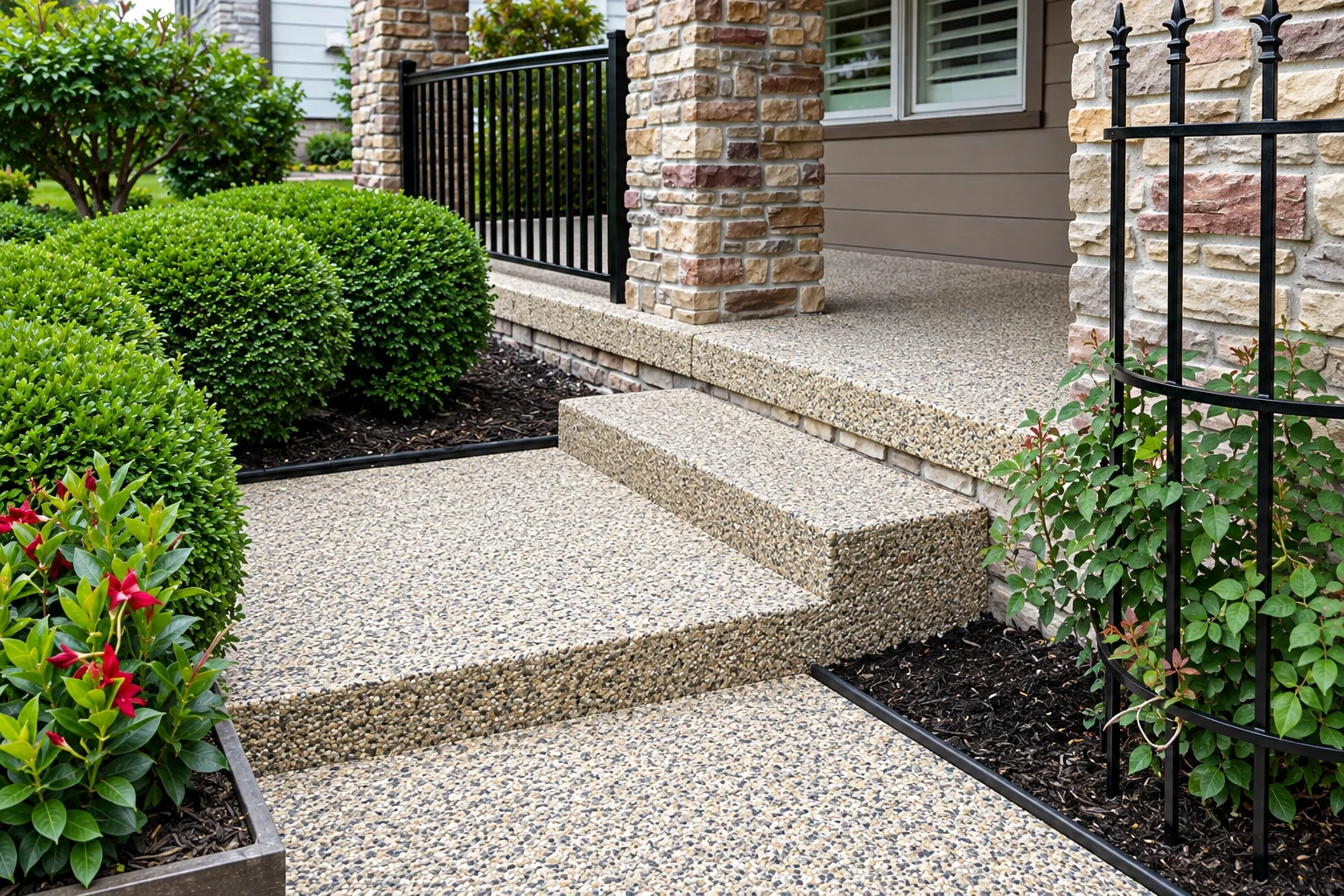
Garage floor concrete is a flat slab poured over packed soil or gravel fill after the topsoil and soft spots are dug out. In Vacaville we treat that ground work as half the job, so you end up with a floor that holds up under a parked car.
Most people call us because the old floor is cracked, uneven or pooling water, or because they're building a garage and want the slab done right the first time. The price moves with the size of the garage, how much digging and packing the ground needs, how thick the slab is and whether you add steel or a color finish. The schedule turns on the ground work, the weather and the wait before you can park on it. I'll give you your own figure in a written estimate once I've seen the garage, and if the driveway leading up to it is in the same shape, I can look at both on that visit.
I come out myself to look at your garage and write the estimate, and our own crew does the work with me running the job. The person who checked your ground and answered your questions is the same one standing there when the concrete truck pulls in.
I worked summers on concrete crews all through school, pulling forms and learning to finish from people who'd done it for decades, then started this business in 2013. Thirteen years later, I still slow down and explain a job before anything gets poured.
California's licensing board counts forming, pouring and finishing flatwork, the flat concrete in garage floors and driveways, as concrete contractor work. We're licensed and insured. When you're ready, call (707) 514-3389 or send the form, and I'll come take a look.
Call (707) 514-3389 or send the form with your garage size and a few photos of the current floor, and we'll reply within one business day. I'll come out for a free estimate on site, look at the ground with you and hand you a written estimate with the work spelled out line by line. There's no pressure and no obligation.
Inside city limits, Vacaville's Building Division reviews and inspects new construction and improvements to existing structures, so I check your address with them before we schedule instead of guessing whether your floor needs a permit. When it does, we handle the application and set up the inspections, and the permit, approved plans and supporting papers have to be at the house, because the city won't hold an inspection without them on site. If you'd rather pull an owner-builder permit yourself, the city has you register a Public User account first.
The ground is the bigger local issue. One data site puts 51% of Solano County's soil area in high shrink-swell clay, also called expansive clay, which swells when it's wet and shrinks as it dries. That's a county figure and not a reading of your lot, so I check what's actually under your garage before I price the base. The same question comes up on jobs in Fairfield and Dixon, and we work in plenty of other cities around Vacaville too.
Probably some, yes, because all concrete tends to crack as it shrinks and the ground moves, and national trade guidance says a completely crack-free slab isn't possible. A good bid limits and controls the cracks with a packed base, steel in the right spot and joints that give the cracks a place to go. Anyone promising you no cracks is telling you what you want to hear.
One Bay Area guide from 2024 puts a reinforced concrete slab at about $9 to $16 per square foot, before any staining or stamping. That's the going rate in the area, not our price, and the same guide puts reinforced slabs above plain ones, with stain or stamping added on top. Your own number comes in my estimate after I've seen the garage.
One Bay Area guide says a new slab should be walkable within 48 hours and suggests waiting about a week before heavier loads. Concrete takes about a month to fully cure, so plan where the car and the storage go for those first weeks. National trade guidance is to spray the surface with a curing compound or keep it under damp burlap for at least 3 days, and I'll tell you which we're using and who's looking after it.
Those lines are control joints, planned cracks that are formed, tooled or sawed into the slab so the concrete cracks along them instead of wherever it likes. They're there on purpose, and timing matters, because joints cut late or skipped leave cracks in places nobody chose.
Ask each bidder what slab thickness the price assumes, whether the ground work is included and where the steel will sit. One Bay Area guide says home floor slabs run four to six inches thick, with garages at the thicker end, so two bids at different thicknesses aren't the same job. My estimate spells out the base, the steel and the thickness so you can line the bids up side by side.