Poured in place steps
We form and pour these right at your door, so they can fit an odd width, wrap a corner or join a landing or porch. They take more labor and a curing wait, but the steps get sized to your entry instead of the other way around.
Cracked, sinking or uneven front steps? We build new concrete steps on a packed base, laid out so every rise matches from top to bottom.
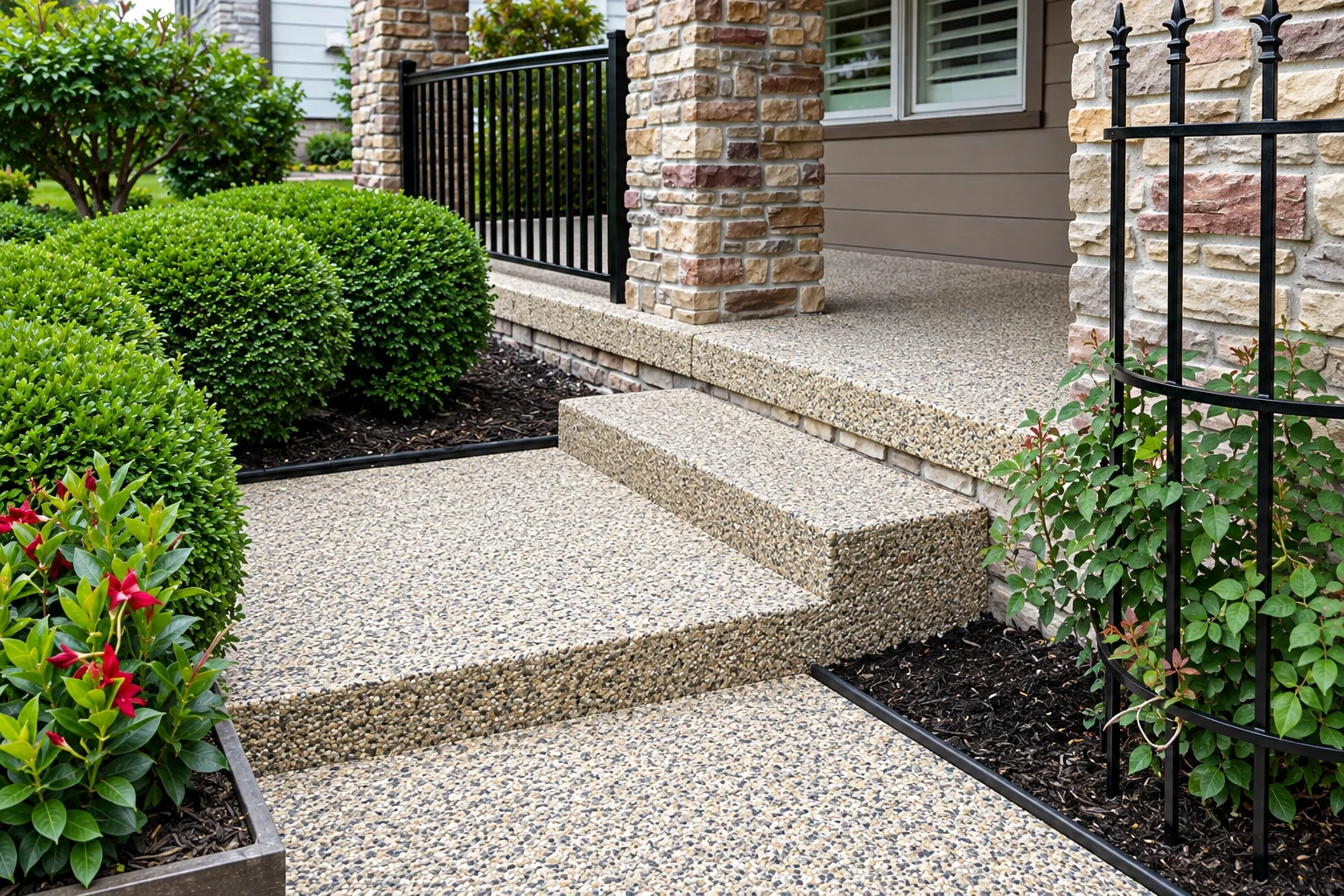
Concrete steps construction in Vacaville means building new entry steps, poured in place or set as precast, on a base built to stay put, so you get a safe, even climb to your door.
Most calls start with a front stoop that's cracked, pulling away from the house or rocking a little underfoot, and usually the trouble is underneath, where loose fill settled and took the steps down with it. Steps can sit on the ground, tie into a landing or the house foundation, or span like a stair, and how yours are supported shapes the whole build. The price moves with how many steps you need, how wide they are, poured or precast, the finish you pick and how much old concrete has to come out first. The schedule turns mostly on tear-out, base work and curing, which is the wait while new concrete gains strength before it takes a load. I'll walk your entry, measure it and give you a written estimate with each part of the work on its own line.
I come out myself to look at your entry and write the estimate. Our own crew does the work, and I run the job myself, so the person who laid out your steps on paper is the same one checking them before anything gets poured.
We've been in business since 2013, 13 years now, and I learned to finish long before that, working summers through school on crews next to people who'd done it for decades. That's where I picked up the habit of explaining a job before we pour it.
We're licensed and insured. California requires a current state license for anyone contracting work worth $1,000 or more in combined labor and materials, and the state licensing board adds that the smaller-job exception doesn't apply when the work needs a permit, so ask any contractor for theirs.
That's our promise on every set of steps we build. To get started, call (707) 514-3389 or send the form with the number of steps, how wide they are and a photo of your entry, and I'll set a time to come look.
We reply within one business day, whether you call or send this form. I'll set a time to come out, look at your entry and measure the rise, then give you a free written estimate with the work spelled out line by line. There's no pressure and no obligation to go ahead.
The City of Vacaville's Building Division reviews and inspects all new construction and improvements to existing structures within city limits, and before we build I check your address with that office instead of guessing. When a job needs a permit, we handle the application and set up the inspections. If your steps or walk reach out toward the sidewalk or street, the city also lists encroachment permits for work in the public right-of-way, so we look at where your property line falls before we plan the layout.
One soil data site rates Solano County's exposure to expansive clay as extreme, the kind of clay that swells when it gets wet and shrinks as it dries, and that movement can crack slabs and footings. I can't tell you what's under your yard until we dig, but even a small decorative set of steps needs more under it than loose fill, so the base is always in our quote. We build steps the same way for homeowners in Fairfield and Dixon.
It usually comes down to the shape of your entry and your budget. One consumer guide suggests poured steps for custom widths, steps attached to a porch or decorative finishes, and precast for a standard 2 to 4 step replacement on a tight budget. I'll tell you which fits once I've measured your entry.
Poured concrete steps across the US usually cost about $200 to $500 per step installed, and that's the national going rate, not our price. Wider steps, a landing or a decorative finish push a job up, while a short, standard set usually sits lower. Your written estimate gives you the figure for your own steps.
One consumer guide puts the life of concrete steps at 30 to 50 years, as long as they have proper footings and air-entrained concrete, a mix with tiny air bubbles worked into it. Since the guide ties that lifespan to both, it's worth asking any contractor what goes under the steps and which mix they're ordering.
Usually it's the ground underneath, loose fill that settles or soil that moves, and the steps tip or crack as it drops away. Water running toward the steps makes it worse, and steps that were never tied to anything solid can separate from the house as they sink. When I look at your old set, I'll show you where it failed.
Use them gently for the first stretch after the pour, because the edges and corners chip easily while the concrete is young. Keep dollies, carts and heavy deliveries off them for a while, and I'll give you the timing for your pour before we leave, since the weather changes it.
A finish with grip, usually a broom finish, which is a light texture dragged across the wet concrete so your feet hold when the steps are wet. A smooth or polished tread looks clean but turns slippery outdoors, so ask any contractor which finish they plan for the treads.