Form & Pour Vacaville ConcreteForm & Pour Vacaville ConcreteRequest an estimate(707) 514-3389

Foundation raising in Vacaville CA - floors back toward level and the cause dealt with

Doors that stick, cracks that keep growing, a floor you can feel slope? We find what's moving your house, then lift it back toward level.

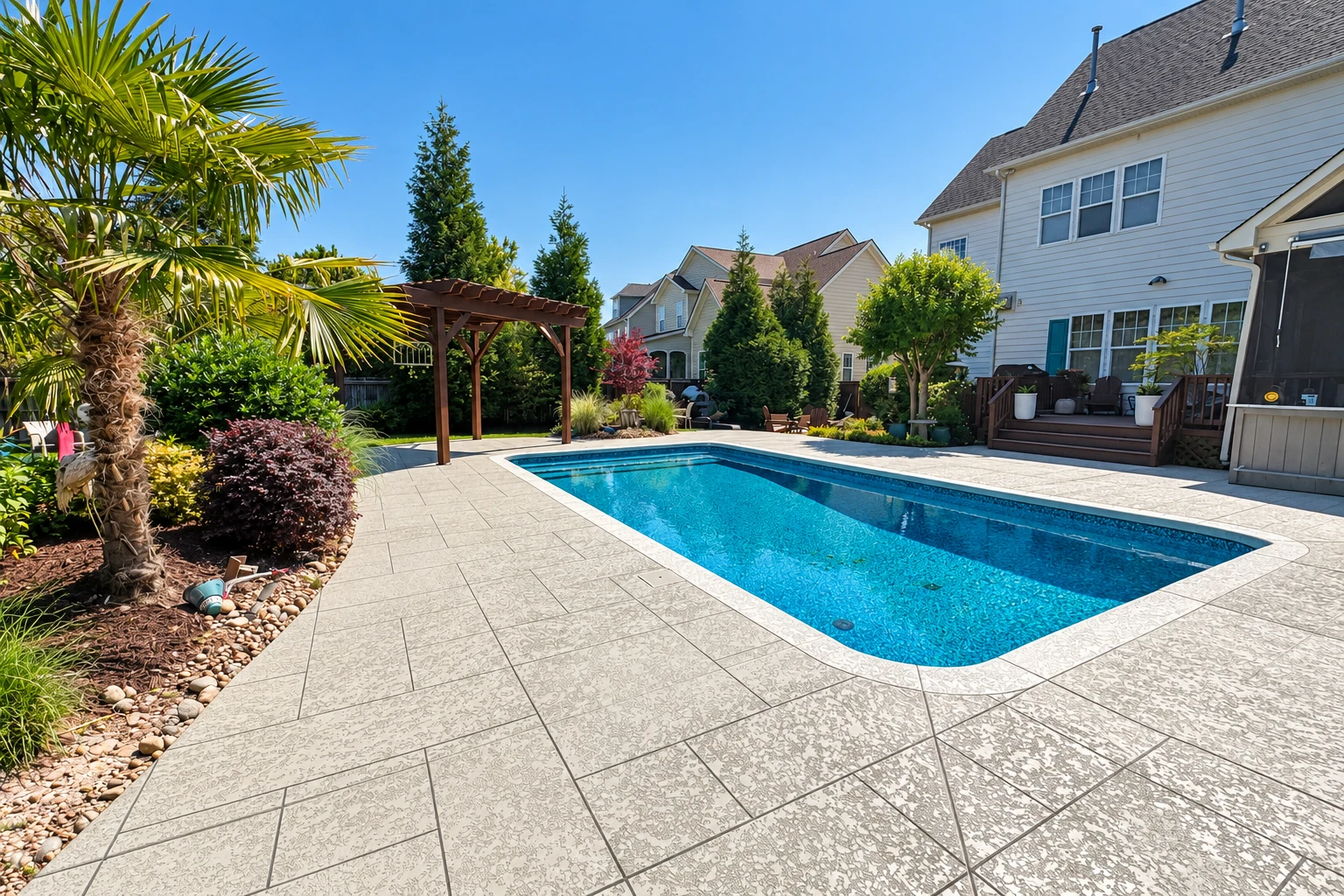
Rectangular swimming pool surrounded by a light stamped-concrete deck, with a pergola, landscaping and a house in the background.

Is your Vacaville house settling, and can it be raised back?

Foundation raising in Vacaville, CA lifts a house or slab that has settled back toward level and puts it on firmer support. At Form & Pour Vacaville Concrete, every one of these jobs starts with finding out why it settled in the first place.

Most people call us once a door starts sticking, a crack over a window gets longer or the kitchen floor feels like it runs downhill. We're based in Vacaville and work in the cities around it, including Fairfield, Davis, Napa, Vallejo and Concord. The biggest thing that moves the price is the kind of foundation you have, because a slab house has to be lifted from piers set down into firm ground, while a raised house with a crawl space underneath can be reached and leveled from below. The schedule turns on the same thing, plus how many lift points your house needs and whether a drainage problem has to be fixed first, and your written estimate shows which of those apply to you.

How our foundation raising works, start to finish

Before we talk about lifting, I want to know whether your house is still moving and what's making it settle, because lifting without fixing a water problem can leave you right back where you started. So I start outside with a level and a tape, looking at where your downspouts empty, which way the yard drains and where the cracks and sticking doors are, and then I check floor heights inside. If water is the cause, it gets dealt with before or alongside the lift. Then we plan the lift around your foundation, dig where we need access, raise the house a little at a time while we watch the doors, floors and cracks, and backfill and clean up when it's done. We put in writing what's included, since patching drywall and trim after a lift is usually a separate job.

Lifting often runs into other concrete. When we need a clean opening through a patio, walk or garage floor to get under the house, our concrete cutting work saws it out neatly instead of breaking up more than we have to. And if it turns out the house is fine and it's the driveway that sank and cracked, a new pour through our concrete driveway building work, on subgrade that's dug out and packed, meaning the ground the slab sits on, is often a better fix than lifting the old slab.

Raising a settled house

This suits a house where doors stick, cracks keep growing and floors slope from room to room. The plan depends on whether it sits on a slab or over a crawl space, and it only moves forward once we know the house is still moving and why.

Lifting a sunken slab

This suits a patio, walk or garage floor that dropped while the house stayed put. Filling underneath can bring a slab back up, but on clay the choice of method matters a lot, and I go through that in the questions below.

Why Vacaville homeowners call Form & Pour Vacaville Concrete to raise a foundation

I come out and write the estimate

When you call, I'm the one who comes out to look at your house, not a salesperson. I walk the outside, check the floors and doors, and write the estimate myself, so the person explaining the job is the same person who'll run it.

Our own crew, with me running it

The people lifting your house work for us, not a crew brought in for the week. I run the jobs myself, so if something under your house turns out different from what we expected, you hear it from me directly and we decide the next step together.

In business since 2013

We've been doing this since 2013, and before that I spent summers on concrete crews learning from finishers who'd done it for decades. That taught me to slow down, explain a job before anything moves, and say so plainly when something isn't settled yet.

Licensed and insured on every job

We're licensed and insured. Raising a house means digging along your foundation and putting real force under it, so it's worth asking anyone who bids your job about both. If anything in our paperwork is unclear, ask me and I'll walk you through it.

Get an on-site look at your settling house and a written plan

We reply within one business day, whether you call (707) 514-3389 or send the form. I'll come out and look at your house for free, with no pressure and no obligation. Then you get a written estimate that spells out the work line by line, including what isn't part of it.

Location
Vacaville, CA 95688
Hours
Mon–Fri: 7 AM–11 PM, Sat–Sun: 6 AM–10 PM

Foundation raising in Vacaville, on Solano County clay

In Vacaville, the city's Building Division reviews and inspects new construction and improvements to existing structures inside city limits, and raising a house is work on an existing structure. Whether your lift needs a permit is something I confirm for your address with that office instead of guessing, and when one is needed we handle the application and set up the inspections.

The ground here is a big part of why houses settle. About 51% of the soil across Solano County is expansive clay, the kind that swells when it gets wet and shrinks as it dries, and that back and forth lifts and drops a foundation unevenly. That's where stair-step cracks in brick and block come from, along with door and window frames pulled out of square. We see the same pattern on jobs in Fairfield and Suisun City, and it's why the lifting method matters so much on clay.

Questions Vacaville homeowners ask about foundation raising

How much does foundation raising cost in Vacaville?

House leveling across the US usually costs about $3,500 to $30,000 per job, and that's a national figure for the whole job, not our price. Where your house lands in that range mostly comes down to the foundation type I mentioned up top and how many lift points it needs. Your written estimate shows exactly what's in your number.

Is foam injection or mudjacking better on clay soil?

On clay like ours, one slab repair guide strongly prefers foam, because it adds almost no weight under the slab. Mudjacking pumps a heavy slurry underneath, and the same guide warns that on soil that couldn't hold the slab up to begin with, that extra weight can make it settle again. Neither method fixes the reason the slab sank, so the guide says to fix drainage before or alongside the lift.

How long does foundation raising take, and can I stay in my house?

One cost guide puts shimming a raised house, the kind with a crawl space, at 1 to 3 days, and lifting a slab house on piers at 3 to 7 days depending on how many piers go in. So if you're on a slab, plan for the longer job. You can usually stay home the whole time, though slab work is noisy and means digging around the outside walls.

How do I know if my house is still settling or just old?

Watch for change, because whether the house is still moving matters more than whether it's a little off. A common industry threshold calls a floor out of level at about 1 inch of drop over 20 feet, but most older homes are somewhat out of level and work fine. Leveling stops existing cracks from getting worse and can partly close some, though patching them is the separate job I mentioned earlier.

Is there a California license for foundation jacking contractors?

Yes, California's contractor licensing board has a classification for pile driving and pressure foundation jacking. It covers driving piles and injecting concrete or mortar into foundations to stabilize them, so it's fair to ask anyone bidding your job what license covers the lifting.

How do I get ready for a foundation raising estimate?

Know whether your house sits on a slab or over a crawl space, and note where the cracks and sticking doors are. The most useful thing you can tell me is whether those are still changing, like a crack that's gotten longer or a door that closed fine last year. When you're ready, call (707) 514-3389 or send the form.

Call (707) 514-3389