A new stamped slab
This suits bare ground where you want a patio or walkway, or an old slab that's moving too much to cover. It costs more up front when old concrete has to come out, but you get a fresh, packed base under the pattern.
Plain gray slab out back? We stamp, color and seal a new pour, or a sound old slab, so it looks like stone or brick.
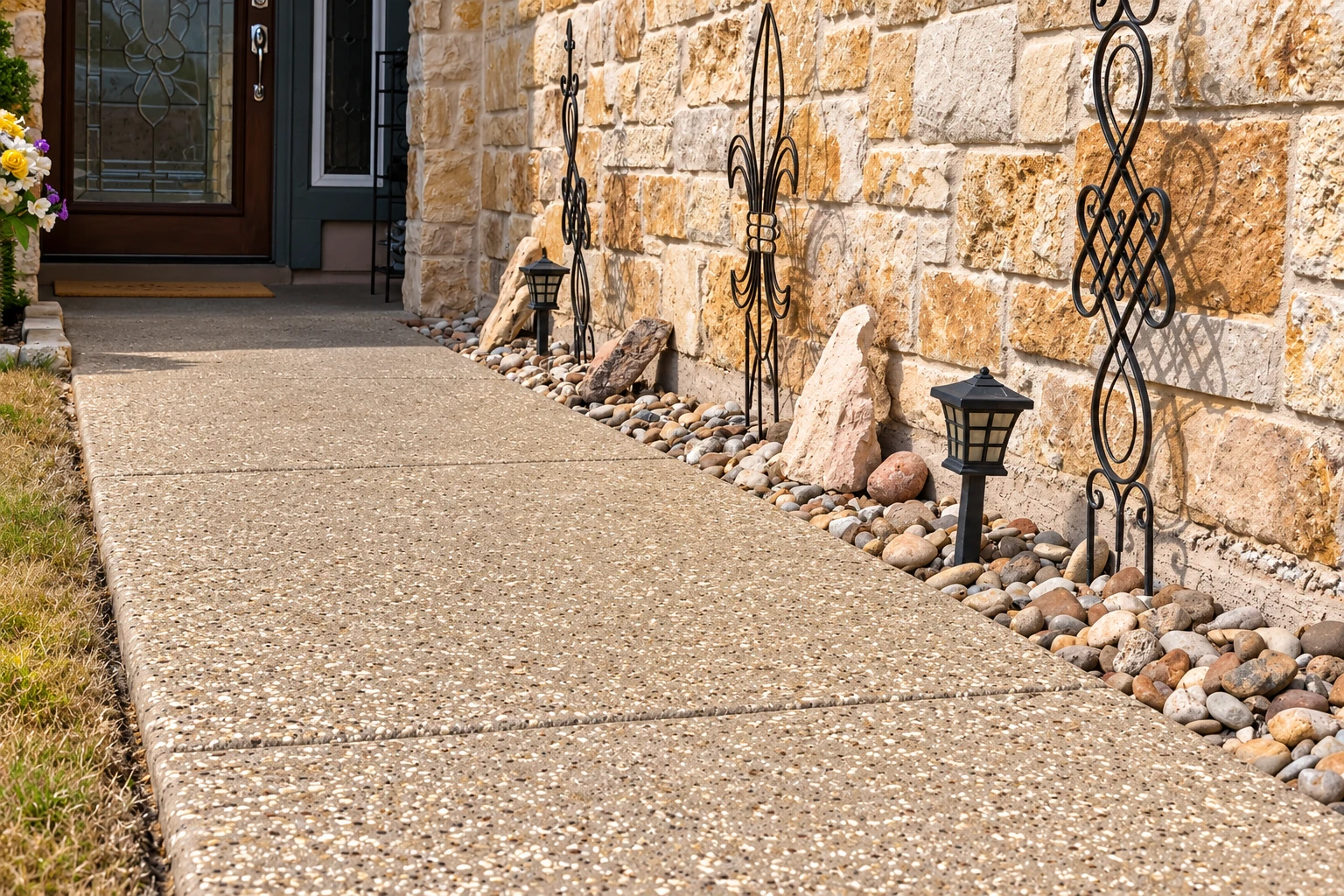
Decorative concrete in Vacaville usually means stamped concrete, which is colored, pressed with rubber pattern mats while it's still soft and then sealed, so a patio, walk or driveway takes on the look of stone, brick, wood or tile. We pour it as a new slab or lay it over an old slab that's still sound, depending on what the concrete you have can handle.
Most people call because the slab out back has gone plain, stained or chipped, and they want it to look like more without guessing what that costs. The price mostly turns on how big the area is, whether the old concrete is sound enough to cover or has to be broken out and hauled off, and the pattern, color and sealer you pick. The schedule turns on that same tear-out question, plus the weather on pour day and curing, the wait while fresh concrete hardens before it takes feet or tires. Your written estimate spells all of that out line by line, so you can see what each piece costs. If you're starting from bare dirt, our concrete patio construction page covers the slab itself.
I come out myself to look at your slab and write the estimate, and I run the job once our own crew starts. We're best known for slowing down and explaining the work before anything gets poured, and I'm happy to answer the same question twice.
I started this business in 2013 after years of summers on concrete crews, pulling forms, wheeling concrete and learning to finish from people who'd done it for decades. That's where I learned which shortcuts look fine on pour day and show up later.
California's state licensing board counts forming, pouring, finishing and installing flat concrete as concrete contractor work, and a stamped patio or driveway is all of that. We're licensed and insured. Call (707) 514-3389 or send the form to set up a visit.
We reply within one business day, and the estimate is free, done on site and comes with no obligation. After you call or send the form, I come out, look at the ground or the old slab, and write up the work line by line. It helps to have the rough size of the area and a few photos of any existing slab ready.
Inside Vacaville city limits, the city's Building Division reviews and inspects new construction and improvements, so that's the office your job goes through. The exempt list I know of is Solano County's, which requires a building permit unless the work is on its list, and that list names driveways and sidewalks no more than 30 inches above the ground next to them, not over a basement or a room below, and not part of an accessible route, a path that has to meet accessibility rules. Patios and overlays aren't named, so whether your job needs a permit isn't settled until we check your address with the city, and I'll tell you what they say instead of guessing. When a permit is needed, we handle the application and set up the inspections, and if you'd rather pull it yourself as an owner-builder, you register with the city for a Public User account first.
Around Vacaville, a lot of our decorative calls are backyard patios and front walks on established houses where the original slab has gone plain or stained, plus new pours where people want the yard to look finished. We do the same work in Fairfield, Davis and other cities nearby, so if yours isn't on the site, call and ask.
Your price comes from a written estimate after I see the site, because a few choices move it more than size alone. Covering a sound slab with an overlay usually costs less than breaking out old concrete and pouring new, and a busier pattern, a second color or grip in the sealer adds labor and material. I'll show you which choices move the number most, so you can decide where to spend.
It can be resurfaced if it's structurally sound and a new layer can bond to it. An overlay only renews the surface, so a slab that's heaving, settling or cracked through its full depth needs more than that, usually a tear-out and a new pour. That's what I'm checking for when I walk your slab, before we price anything.
Reseal when water and stains stop beading up on the surface or the color starts to look flat. The trade's own guidance is to reseal as needed, not on a set number of years. Most stamped work gets a film-forming sealer because it brings out the color, and it has to go on thin and at the right time, since a heavy coat or one put down too early can leave visible flaws.
It can be, especially when it's freshly sealed. The usual fix is a traction additive mixed into the final coat of sealer, which is the grip we talk about for slabs near a door or a pool.
Stamped concrete cracks for the same reasons any slab does, and the pattern doesn't stop it. That's why it still gets control joints, and a fair question for any contractor is how those joints will be hidden in the pattern. I'll show you where ours will run before we pour, so the cracks that do come usually land where we chose.
Pour early in the morning or late in the evening, which trade guidance calls the most practical answer when the pour can't wait. Heat, low humidity and wind dry the surface water fast, and stamped concrete needs that surface workable long enough to press the mats. We set the pour time with that in mind and talk it through with you when we schedule.