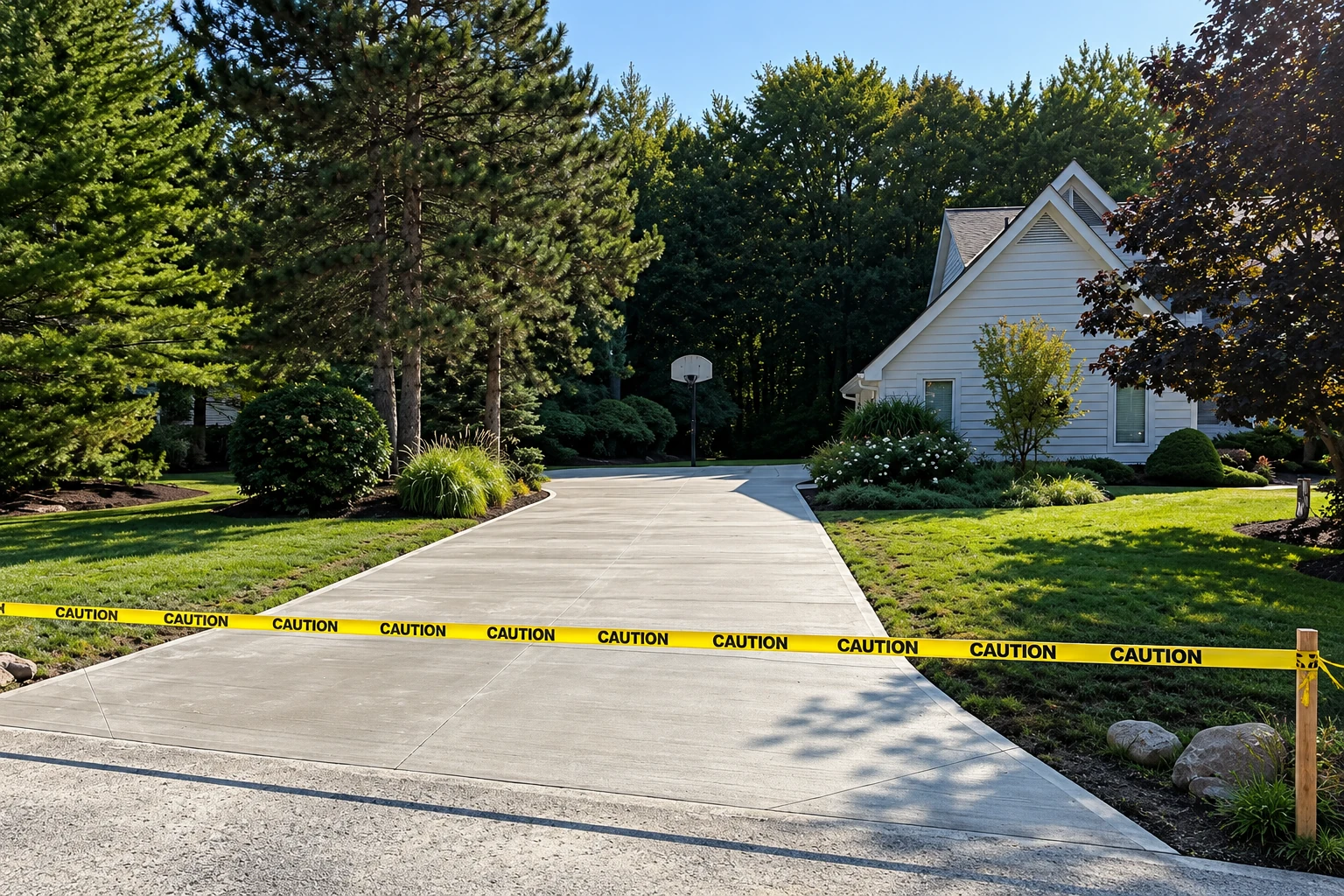
I start by walking the site with you and asking where the delivery trucks, garbage trucks and dumpsters will go, because those spots get built for heavier loads than the parking stalls. We plan around the city's storm water requirements at the same time so they don't hold up the job later. Our crew digs out the soft soil and packs the subgrade, the ground the slab sits on, so the lot doesn't settle with the dirt underneath it. We set the forms so water runs to the drains and away from any building, and we place rebar, the steel that holds a slab together, where the loads call for it. We also time the pour so we're not finishing it in the worst of the day's heat. A broom finish gives tires and shoes some grip, and the control joints, grooves that set where the slab cracks, get cut on time. If the budget gets tight, I'll cut back on looks before I cut back on the base, because nobody sees the base on day one, and it's what decides how the lot holds up years later.
A lot usually comes with other concrete work. Light poles, sign posts and low walls along the edge each need concrete footings, and we set those before the pour so nothing has to be cut out later. If a building or slab beside the lot has sunk, it can make sense to look at foundation raising first, so the new pavement meets it at the right height.
A full concrete lot
This suits a new lot, or an old one that's failing all over, because the whole surface gets the same dug-out base and one drainage plan. It's the bigger job up front, and it's the one I'd pick for a lot that sees steady truck traffic.
Concrete where the heavy loads land
Some owners keep their existing pavement in the stalls and replace only the entrance, the truck lanes and the dumpster pad with concrete, because those are the spots that break up first. It costs less now, and we work out the drainage so water doesn't collect where the two surfaces meet.